Showing posts with label Ellen Aprill. Show all posts

Tuesday, October 15, 2019

Wealth, Philanthropy and Politics — Considering 'Wealth Tax' Proposals

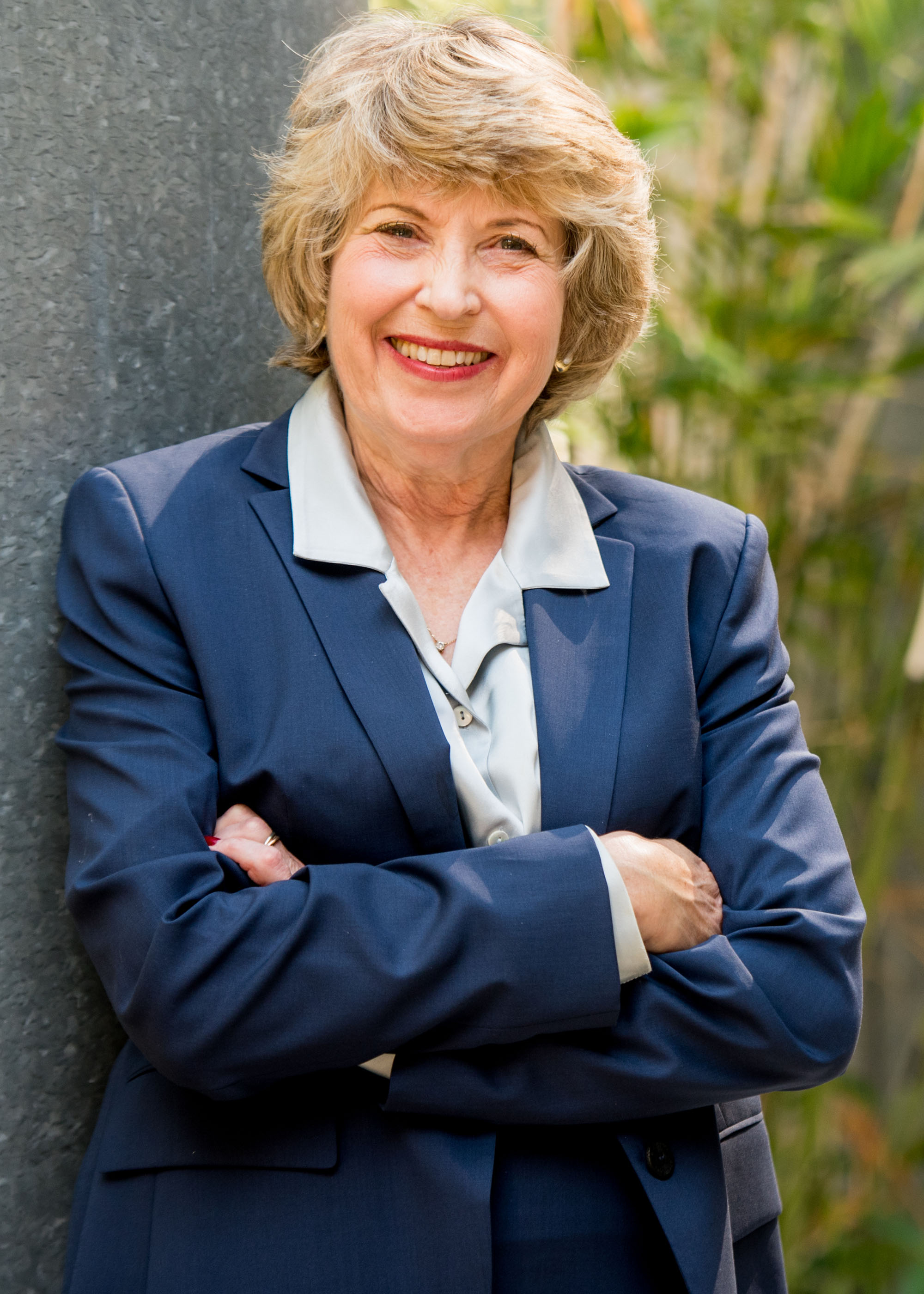
By Professor Ellen P. Aprill

This op-ed originally appeared in the Tuesday, October 15, 2019 edition of The Hill.

The impact of private wealth on public policy through tax-exempt organizations has garnered much attention of late, with recent scandals involving the Sacklers, Jeffrey Epstein, and a number of prestigious universities. Recent critiques, however, fail to emphasize sufficiently the role of wealth in campaign finance. Citizens United and the rise, in its wake, of Super PACS able to solicit and spend unlimited amounts make such consideration crucial. Today more than ever, political power of the wealthy means that government spending, like charitable spending, is likely to reflect the interests of the wealthy.

Current proposals for a wealth tax also need to confront this issue. On Sept. 5, as part of the Brookings Papers on Economic Activity, Emmanuel Saez and Gabriel Zucman presented an important new paper on progressive wealth taxation. The Saez-Zucman paper describes a wealth tax as a means of reducing wealth concentration needed because of such concentration’s effect on democratic institutions and policy-making. (The paper notes that political contributions are extremely concentrated, with 1.01 percent of the population accounting for over a quarter of all such contributions.) According to those present, discussion at the session included whether a wealth tax would reduce billionaires’ political influence.

To prevent abuses of a wealth tax, the Saez-Zucman paper proposes that donor advised funds — accounts at public charities for which donors can make recommendations as to the distribution or investment of amounts in the accounts — and funds in private foundations controlled by funders “should be subject to the wealth tax until the time such funds have been spent or moved fully out of the control of the donor.” (The paper leaves to another day the question about how to treat private foundations no longer controlled by the original funder and how to avoid gaming of “control.”)

Tuesday, January 16, 2018

Amending the Johnson Amendment in the Age of Cheap Speech

This is an excerpt from Professor Ellen Aprill's article published in the Illinois Law Review, in which Professor Aprill concludes: 

Charities can have enormous influence on political campaigns with little expense in today’s digital world. Contributions to charities are deductible; contributions to PACs and non-charitable section 501(c) organizations are not. Many who wish to intervene in political campaigns will shift their contribution from PACs and social welfare organizations to charities. I suspect that the Joint Committee of Taxation underestimates the revenue loss from even a five-year de minimis exception.

Under our current campaign finance regime, only dollars that have been taxed can be used for political intervention. A de minimis exception for campaign intervention for charities would undermine this basic principle. Moreover, over time, permitting charities to engage in partisan politics would reduce the respect long afforded to these entities and thus harm the sector. A de minimis exception to the campaign intervention prohibition would damage both the laws regulating charities and the laws regulating campaign finance. Our country would be far poorer for such changes.

Thursday, December 17, 2015

Reflections on the Chan Zuckerberg Initiative

By Professor Ellen P. Aprill
Originally published on TaxProf Blog
 
A little more than two weeks have passed since Priscilla Chan and Mark Zuckerberg announced that they would give away 99% of their Facebook stock, currently valued at $45 billion, during their lives. This distance, albeit short, gives time to reflect back on what the Chan Zuckerberg Initiative is and what it is not.

Early coverage, particularly headlines, suggested that Chan and Zuckerberg had made a current donation to charity. Facebook quickly worked to correct this erroneous impression. The Chan Zuckerberg Initiative involves a transfer to Delaware LLC, a limited liability company, not a public charity or private foundation. For tax purposes, the transfer to the LLC is a tax nothing; it has no effect on the couple’s taxes. As Professor Michael Graetz stated Mr. Zuckerberg “has moved money from one of his pockets to another.” Chan and Zuckerberg have given nothing away yet.


Monday, June 13, 2011

Prof. Aprill's law review article on dictionary citations referenced in NY Times story

Professor Ellen Aprill's law review article, "The Law of the Word: Dictionary Shopping in the Supreme Court," was cited in a New York Times column about dictionary citations in opinions. Below is an excerpt of the column, "Dictionary Citations by Justices Rise Sharply":

"A decade later, Ellen P. Aprill, who teaches at Loyola Law School in Los Angeles, considered the implications of that finding in an article on "dictionary shopping in the Supreme Court."

"It may also be a surprise to the Supreme Court justices who look to dictionaries as authorities in construing statutes," she wrote in the Arizona State Law Journal, "that in good measure they are interpreting law according to The New York Times."

Wednesday, May 25, 2011

Politics and the gift tax: The role of noncharitable exempt organizations

By Professor Ellen Aprill

This is another installment in the Summary Judgments summer series, "The Headline Club," in which Loyola Law School professors will discuss legal issues ripped from the front page.

The role of noncharitable exempt organizations, in particular section 501(c)(4) social welfare organizations, was perhaps the key feature of last year's election. One New York Times editorial, for example, declared: "For all the headlines about the Tea Party and blind voter anger, the most disturbing story of this year's election is embodied in an odd combination of numbers and letters: 501(c)(4)." IRS rules permit Section 501(c)(4) organizations to engage in political campaign activity so long as such is not their primary activity. At the same time, section 501(c)(4) organizations need not disclose their contributors to the public. There is, however, no statutory exception to the gift tax for transfers to section 501(c)(4) organizations., and the IRS announced as far back as 1982 that it considered such transfers subject to gift tax.

Until recently, the IRS has not enforced the gift tax on transfers to section 501(c)(4) organizations for many years. Moreover, few contributors would be subject to the gift tax. Currently, a contributor to a section 501(c)(4) organization does not treat annual transfers of the first $13,000 as a taxable gift; a contributor would owe no gift tax out of pocket until total transfers to these organizations and other taxable gifts exceeded $5,000,000.

Nonetheless, some individuals do contribute very large amounts to section 501(c)(4) organizations. It recently became known - and the IRS confirmed - that the agency has sent letters to five donors to section 501(c)(4) organizations asking why they had not filed a gift tax return for these transfers. The IRS stated that the inquiries were initiated by agency employees, not the White House or other administration officials, as part of increased efforts to enforce the estate and gift tax. (We know, for example, that in addition to inquiries regarding transfers to section 501(c)(4) organizations, the IRS has asked a number of states for records of intrafamily transfers.)

The current gift tax treatment of transfers to section 501(c)(4) organizations is an anomaly. Under the Internal Revenue Code, neither transfers to charitable organizations nor transfers to political organizations are subject to the gift tax. Yet, transfers to section 501(c)(4) organizations, which can share features of charities and political organizations, enjoy no such statutory exception. Perhaps the current furor over IRS enforcement of the gift tax for transfers to section 501(c)(4) organizations will impel Congress to do what it should have done long ago and change the law and provide a statutory exception for such transfers. At the same time, as I have suggested in a recent article, Congress could reconsider the disclosure rules applicable to section 501(c)(4) organizations.

Wednesday, January 19, 2011

Professors Aprill and Hasen on lobbying

Professors Ellen Aprill and Rick Hasen co-authored the article "Lobbypalooza" for The American Interest magazine. The article briefly describes the history of tax-related and disclosure-related regulation of lobbying. It also flags some developments in the lower courts, in which lower courts are relying on Citizens United to strike down some lobbying regulations. Hasen describes those lower court developments in his draft, "Lobbying, Rent Seeking, and the Constitution" (posted on SSRN).

Excerpt from "Lobbyapalooza":

"In the face of the financial crisis, partisan recriminations and other problems of contemporary American governance, some have urged limits on lobbying in order to promote the public interest. They fear not only potential lobbyist corruption, but also lobbyists facilitating a raiding of the public fisc...Lobbyists provide legislators and other government officials with crucial information and convey the points of view of important constituencies. A responsive government needs to hear various viewpoints, and in a complex world legislators and staffers need help analyzing, and even writing, important legislation. It is hard to imagine the U.S. government today functioning without lobbying. Moreover, lobbying also enjoys constitutional protections. The First Amendment guarantees both free speech and the right to petition the government.

Friday, January 14, 2011

Tax reform event live streaming on web today

Loyola Law School, Los Angeles is hosting "Starving the Hidden Beast: New Approaches to Tax Expenditure Reform" today in partnership with the Urban-Brookings Tax Policy Center. Video from the daylong event is:

David Gamage, University of California, Berkeley School of Law: "Tax Salience and Tax Expenditures"

COMMENTATOR: Damon Jones, Harris School of Public Policy, University of Chicago


10-11:30 a.m.: Reforming the Tax Expenditure Budget Presentation


MODERATOR: Sarah Lawsky, University of California, Irvine School of Law

PANELISTS:

Linda Sugin, Fordham Law School: "Tax Expenditures, Reform, and Distributive Justice"

Eric Toder and Donald Marron, Urban-Brookings Tax Policy Center: "Tax Expenditures and the Size of Government"

COMMENTATOR: Daniel Shaviro, New York University School of Law


11:30 a.m.: Lunch


12:45-2:15 p.m.: Evaluating Tax Expenditures


MODERATOR: Rosanne Altshuler, Rutgers University


PANELISTS:

Theodore Seto, Loyola Law School, Los Angeles: "Reframing the Tax Expenditure Budget"

Thomas Hungerford, Congressional Research Service: "Tax Expenditures"

COMMENTATOR: Edward Kleinbard, USC Gould School of Law


2:30-4 p.m.: Approaches to Tax Expenditure Reform


MODERATOR: Katherine Pratt, Loyola Law School, Los Angeles

PANELISTS:

Marvin Phaup, Federal Budget Reform Initiative, Pew Economic Policy Group: "Integrating Tax Expenditures with the Budget Process"


Diane Lim Rogers, Chief Economist, Concord Coalition: "Tax Formed in the Proposal of the Deficit-Reduction Commissions"

COMMENTATOR: Elizabeth Garrett, USC Gould School of Law


4:00 p.m.: Reception